Author: Gallagher

  • The Three Sisters

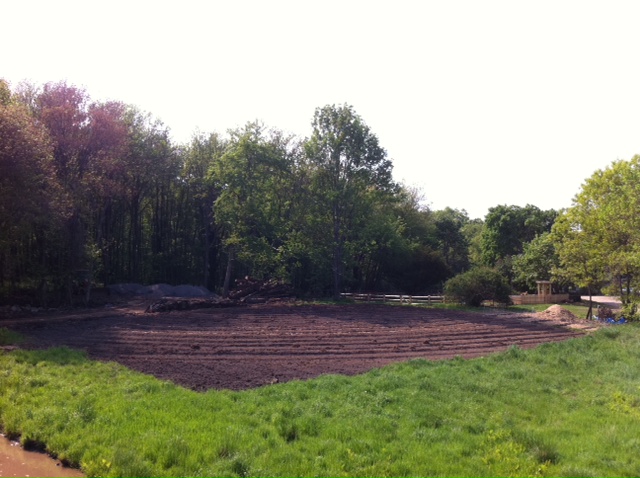
    Dave and I final­ly got around to plant­i­ng some­thing in the far field today. Even though we wake up at the crack of dawn, it nev­er seems like the days are long enough.

    We want­ed to try grow­ing a lit­tle bit of corn this year, just to see how it goes. In my per­ma­cul­ture (per­ma­cul­ture: a sys­tem of cul­ti­va­tion intend­ed to main­tain per­ma­nent agri­cul­ture or hor­ti­cul­ture by rely­ing on renew­able resources and a self-sus­tain­ing ecosys­tem) book I’ve been read­ing about cre­at­ing poly cul­tures, or in oth­er words, com­pan­ion plant­i­ng. The idea is that instead of main­tain­ing clas­si­cal­ly straight and monot­o­nous rows of one kind of plant, you mix veg­eta­bles togeth­er that are mutu­al­ly ben­e­fi­cial. One of the most famous guilds (plant com­bi­na­tions) is the Native Amer­i­can “three sis­ters”: corn, beans and squash. The corn cre­ates a trel­lis for the beans, the beans fix nitro­gen in the soil and improve it, and the squash cov­ers the ground and inhibits weeds. Togeth­er, these three plants cre­ate a bet­ter prod­uct, using less space and requir­ing less effort.

                                                                                             The Legend:

    ?nce upon a time very long ago, there were three sis­ters who lived togeth­er in a field. These sis­ters were quite dif­fer­ent from one anoth­er in their size and also in their way of dress­ing. One of the three was a lit­tle sis­ter, so young that she could only crawl at first, and she was dressed in green. The sec­ond of the three wore a frock of bright yel­low, and she had a way of run­ning off by her­self when the sun shone and the soft wind blew in her face. The third was the eldest sis­ter, stand­ing always very straight and tall above the oth­er sis­ters and try­ing to guard them. She wore a pale green shawl, and she had long, yel­low hair that tossed about her head in the breezes.
    There was only one way in which the three sis­ters were alike. They loved one anoth­er very dear­ly, and they were nev­er sep­a­rat­ed. They were sure that they would not be able to live apart.
    After awhile a stranger came to the field of the three sis­ters, a lit­tle Indi­an boy. He was as straight as an arrow and as fear­less as the eagle that cir­cled the sky above his head. He knew the way of talk­ing to the birds and the small broth­ers of the earth, the shrew, the chip­munk, and the young fox­es. And the three sis­ters, the one who was just able to crawl, the one in the yel­low frock, and the one with the flow­ing hair, were very much inter­est­ed in the lit­tle Indi­an boy. They watched him fit his arrow in his bow, saw him carve a bowl with his stone knife, and won­dered where he went at night.
    Late in the sum­mer of the first com­ing of the Indi­an boy to their field, one of the three sis­ters dis­ap­peared. This was the youngest sis­ter in green, the sis­ter who could only creep. She was scarce­ly able to stand alone in the field unless she had a stick to which she clung. Her sis­ters mourned for her until the fall, but she did not return.
    Once more the Indi­an boy came to the field of the three sis­ters. He came to gath­er reeds at the edge of a stream near­by to make arrow shafts. The two sis­ters who were left watched him and gazed with won­der at the prints of his moc­casins in the earth that marked his trail.
    That night the sec­ond of the sis­ters left, the one who was dressed in yel­low and who always want­ed to run away. She left no mark of her going, but it may have been that she set her feet in the moc­casin tracks of the lit­tle Indi­an boy.
    Now there was but one of the sis­ters left. Tall and straight she stood in the field not once bow­ing her head with sor­row, but it seemed to her that she could not live there alone. The days grew short­er and the nights were cold­er. Her green shawl fad­ed and grew thin and old. Her hair, once long and gold­en, was tan­gled by the wind. Day and night she sighed for her sis­ters to return to her, but they did not hear her. Her voice when she tried to call to them was low and plain­tive like the wind.
    But one day when it was the sea­son of the har­vest, the lit­tle Indi­an boy heard the cry­ing of the third sis­ter who had been left to mourn there in the field. He felt sor­ry for her, and he took her in his arms and car­ried her to the lodge of his father and moth­er. Oh what a sur­prise await­ed here there! Her two lost sis­ters were there in the lodge of the lit­tle Indi­an boy, safe and very glad to see her. They had been curi­ous about the Indi­an boy, and they had gone home with him to see how and where he lived. They had liked his warm cave so well that they had decid­ed now that win­ter was com­ing on to stay with him. And they were doing all they could to be useful.
    The lit­tle sis­ter in green, now quite grown up, was help­ing to keep the din­ner pot full. The sis­ter in yel­low sat on the shelf dry­ing her­self, for she planned to fill the din­ner pot lat­er. The third sis­ter joined them, ready to grind meal for the Indi­an boy. And the three were nev­er sep­a­rat­ed again.
    Every child of today knows these sis­ters and needs them just as much as the lit­tle Indi­an boy did. For the lit­tle sis­ter in green is the bean. Her sis­ter in yel­low is the squash, and the elder sis­ter with long flow­ing hair of yel­low and the green shawl is the corn.
    –A Mohawk leg­end
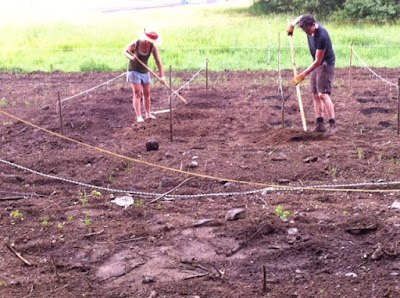
    First, Dave and I marked off a 20 by 25 foot space in the sec­ond field, and then divid­ed it into six 20 foot rows with stakes and string.

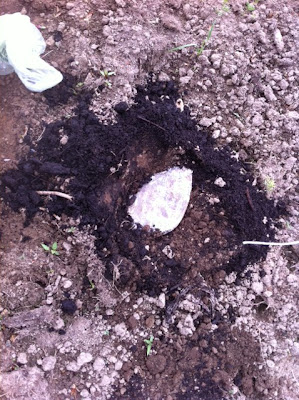
    Then, we marked the string every 5 feet to sig­nal where to cen­ter our mounds. Mound­ing the soil is the tra­di­tion­al way to plant the three sis­ters, at least in this cli­mate and soil, because it allows for bet­ter drainage. We stag­gered the spac­ing in adja­cent rows. Before shap­ing the mounds, we dug a lit­tle hole and buried fish car­cass­es from my mom’s freez­er (you may remem­ber from Amer­i­can His­to­ry class that this was anoth­er Native Amer­i­can trick). Then, a scoop of com­post on top of that, and then, final­ly, we raked the mounds.
    That’s a floun­der, in case you can’t tell.
    Dave is 1/32 Chero­kee, in case you can’t tell
    The Final Product!
    It’s hard to take good pic­ture of dirt.
    In each mound we plant­ed four corn seeds, 6 inch­es apart. The got a cou­ple nice, soft sum­mer rains this after­noon so hope­ful­ly they’re off to a good start. We’ll wait to plant the beans and squash until the corn is a lit­tle bit big­ger, so the fast grow­ing vines don’t over­whelm the lit­tle seedling.
     

  • Chicken Processing Day (caution: not suitable for the faint of heart, or for vegetarians)

    So it’s been a pret­ty excit­ing and busy week in a lot of ways, but for now I’m just going to focus on what hap­pened in the poul­try world. 

    We processed our Cor­nish X chick­ens last Thurs­day (which is a polite way of say­ing that we slaugh­tered and dressed them). These chick­ens have been quite a hand­ful. Despite our best efforts, we’ve lost about a third of them over the last eight weeks. A hand­ful died as chicks, either because they were weak or got smoth­ered. Then, about a week after we put them out­side, we had a very cold and rainy stretch towards the end of May. We think they were weak­ened by the bad weath­er, and that con­tributed to a num­ber of them get­ting sick, most like­ly from a par­a­site called coc­cidia (we noticed bloody stool in their pen). Then, only two days from our sched­uled chick­en pro­cess­ing date, we had an excep­tion­al­ly warm Tues­day and the chick­ens over­heat­ed. We went down to check on them after  lunch to find over a half dozen dead or dying. It was heart-breaking.

    These inci­dents aren’t very easy for me or Dave to talk about. We are respon­si­ble for these ani­mals, and when they die there is no deny­ing that it is usu­al­ly almost entire­ly our fault. Most­ly, we make our­selves feel bet­ter by telling each oth­er how we will nev­er make the same mis­takes again — hope­ful­ly this is true. At the same time, we are get­ting bet­ter at cop­ing with the feel­ing of loos­ing one of our ani­mals. There’s a cliche about how liv­ing on a farm brings you clos­er to under­stand­ing and accept­ing death — so far, this is true.

    In this case, how­ev­er, there is no deny­ing that it was­n’t just our inex­pe­ri­ence that caused so many of these chick­ens to die. For our first exper­i­ment with meat birds we decid­ed to get all Cor­nish X chicks, one of the most pop­u­lar breeds of meat chick­en. The Cor­nish X is bred to grow fast and large, which in turn makes them less hardy than oth­er birds. Through­out the eight weeks we spent with these chick­ens, we could­n’t help but to feel a lit­tle depressed about how help­less they seemed. Cor­nish Xs have a low­er sur­vival rate than oth­er breeds of chick­en, they suf­fer from leg prob­lems and weak hearts, and due to their weight they are very inac­tive. We have vowed from now on to only buy her­itage breed chick­ens. They might take longer to grow and may nev­er get as big (and they con­tain less white meat, and more dark meat, which is okay with me), but Dave and I have agreed that we want to raise birds with bet­ter instincts. Our new chicks are all Free­dom Rangers and Dark Cor­nish­es.

    As we stood and stared and swore at those sev­en dead chick­ens on Tues­day, I felt both guilt and anger. Look at how much food was being wast­ed! These were our biggest chick­ens (which prob­a­bly explains why the heat gave them heart-attacks), they had been gorg­ing them­selves on our expen­sive organ­ic chick­en food for eight weeks! They prob­a­bly totaled 40 lbs of deli­cious organ­ic pas­ture raised chick­en meat, and they were being thrown into the compost!

    It was, by far, the worst day we’ve had to date.

    By prop­ping up one side of the chick­en trac­tor to facil­i­tate a cross breeze, and run­ning an exten­sion cord out from the house to the pen and set­ting up a fan, we were able to keep the chick­ens cool through the rest of the after­noon and into Wednes­day, which was 95 degrees. Need­less to say, we’re plan­ning on mak­ing some changes to the tractor.

    Wednes­day night we went to bed ear­ly. Dave woke up at 3:30 AM to get the scalder going, and then woke me up at 4:30 so I could help him fin­ish set­ting up. The fore­cast Thurs­day said that tem­per­a­tures were sup­posed to be near 100 degrees F, which we were pre­pared for, but we weren’t pre­pared for the thun­der­storms that con­sis­tent­ly rolled through all day. Luck­i­ly, we had a tent for the farm­ers mar­ket that pro­vid­ed just enough shel­ter for the five of us (Dave, me, my mom and two friends) to stay most­ly dry.

    Dave cut up two traf­fic cones and built a stand for them, so we could safe­ty hold the chick­ens upside-down while they bled out. To pluck the birds, we bor­rowed the scalder and the pick­er from anoth­er farm in town. The scalder fills with water and holds it at con­sis­tent­ly 147 degrees F, which is hot enough to loosen the feath­ers on the bird with­out cook­ing it. When we test­ed it out on Tues­day, the scalder took an unbe­liev­ably long time to heat up, so Dave built an insu­lat­ing wood­en box to fit around it to help it reach and hold its tem­per­a­ture.  The pick­er is a cylin­dri­cal spin­ning machine that is filled with lit­tle rub­ber fin­gers. When the scald­ed bird is placed inside, the rub­ber fin­gers pick off all its feath­ers. The pick­er is attached to a hose so the feath­ers can all be washed out the back as the bird spins. The next step, the evis­cer­at­ing, was done by hand.

    Both Mom and I have done a cou­ple pro­cess­ing days with Pete and Jen’s Back­yard Birds in Con­cord, Dave and I have been doing a lot of read­ing and I’ve dealt with my fair share of chick­ens and knives work­ing in the food indus­try, so I felt con­fi­dent that we could process these birds safe­ty and clean­ly. We made sure to keep all our sur­faces hosed down and san­i­tized, and we got the dressed chick­ens iced as quick­ly as pos­si­ble. Pro­cess­ing chick­ens is time-con­sum­ing and sticky work, but it was reward­ing to know that we were final­ly pro­duc­ing our own meat.

    Which brings me to my next point: when the chick­ens died need­less­ly because of a mis­take that I made I felt awful, but when we killed them our­selves them on Thurs­day I felt noth­ing but con­fi­dence in the fact that we were doing the right thing. Yes, it’s hard to slit a chick­ens throat, and yes, it can be kind of dis­gust­ing to gut it, but we had raised these chick­ens as humane­ly as pos­si­ble, and we killed them as humane­ly as well, and if I’m going to be eat­ing meat I feel as if this is some­thing that I should know about and experience.

    With that in mind:


    CAUTION: some of these pic­tures are vio­lent and there is also some blood.


    VIEWER DISCRETION ADVISED.


    Check­ing the tem­per­a­ture on the scald­ing box. We bor­rowed the box and the pluck­er from a farmer cou­ple we know in town. Thank god, it would have been a pret­ty impos­si­ble task with­out them.
    The chick­ens we hung upside in the cones and Dave slit their throats and then let them bleed out into the buckets.
    Then we scald­ed them for about a minute.
    Then they went into the pick­er, which spins the chicken
    Next, we cut off their feet and heads and evis­cer­at­ed the birds.  This is done by cut­ting a hole around the chick­en’s vent and extract­ing their diges­tive sys­tem, heart, liv­er and lungs.
    Intestines
    Heads and guts


    After we were fin­ished we imme­di­ate­ly put the chick­ens into an ice bath to cool them down. Then, we went back over them with pli­ers and a hose to pluck out any stub­born feath­ers and do qual­i­ty con­trol (dou­ble check to make sure all the birds were prop­er­ly gut­ted) before dry­ing them off and bag­ging them up to go into either the refrig­er­a­tor or the freezer.

    We’ve grilled three chick­ens to date and they have all been delicious.

  • My last week in pictures


    Installing the irri­ga­tion system
    The trans­plant­i­ng begins! Lettuce…
    Egg­plants…
    Toma­toes, toma­toes, tomatoes!
    The trel­lis­es start going in (thanks to Bob Hannan)
    The egg­plants must be cov­ered to pro­tect against bugs and wind
    And this morn­ing, baby chicks! Dark Cor­nish­es, they look like lit­tle tigers
  • Pigs on Pasture!

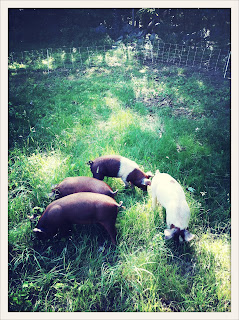
    The pigs are graz­ing, root­ing, sniff­ing, and explor­ing their new pas­ture. They are so hap­py I can’t describe it in words. As soon as I released them from their tem­po­rary train­ing pen, they start­ed eager­ly explor­ing the whole area and soon were run­ning and run­ning all over the place. Its a tru­ly beau­ti­ful sight.

    Tran­si­tion­ing the pigs to pas­ture took some plan­ning and prepa­ra­tion, but in the end it went very smooth­ly. After I got their A‑frame sit­u­at­ed in the field, I built a tem­po­rary pen for elec­tric fence train­ing. I pound­ed some U‑posts into the ground and then just built up some walls with skids and old boards. It was not very pret­ty, but it was easy to set up and it served its purpose.

    I built three sides of the pen and then set up the elec­tric net­ting as the fourth wall. Then I set up more boards on the oth­er side of the net­ting. This is the secret to train­ing pigs to the fence. Pigs don’t have the best eye­sight so the thin strands of the net­ting are eas­i­ly missed. Putting up a phys­i­cal bar­ri­er behind the net serves two pur­pos­es. It helps them see the net­ting bet­ter and it pre­vents them from barg­ing through the net­ting in pan­ic when they first get shocked, which is often their instinc­tu­al reaction.

    When the day final­ly arrived for the big move, I put up some tem­po­rary ply­wood sides on the bed of my pick-up truck and filled it with hay. Then I backed it right up to their pen in the barn­yard and my dad posi­tioned him­self in the truck while Gal­lagher and I caught the pig­gies one by one and hand­ed them up to him. Gal­lagher used a 4x4 piece of ply­wood to help herd the pigs into a cor­ner and then I swooped in and grabbed a hind leg. The pigs are about 50 lbs. now I would guess–I won’t be able to pick them up pret­ty soon! Pick­ing them up by the a hind leg is the best way to do it. It does­n’t hurt them and they don’t strug­gle very much as soon as you have them in the air, but they do scream. They’re not in any pain, but they scream bloody mur­der. Its so loud it real­ly does hurt your ears. And then the sec­ond you set them down on their feet again and let go, they stop.
    We got them all in the truck very quick­ly and they stood calm­ly for their slow ride out to pas­ture­land. We backed the truck up to the pen and did the exact oppo­site maneu­ver. All of them got a shock from the fence with­in sec­onds of explor­ing their new space and quick­ly learned to avoid that wall as they went about rip­ping up the grass and root­ing around for bugs.
    Soon they were right at home. They were in the pen for two days to make sure they had been trained, then this morn­ing I took down the walls and let them roam. As they explored the pad­dock, just like the rap­tors in Juras­sic Park, they each test­ed the fence in a few places, got a shock, let out a brief yelp, and scur­ried back in the oth­er direc­tion. What smart pigs! I’m so proud of them.
  • Readying the Field

    This last week has been pret­ty bru­tal­ly hot, sun­ny and humid — it’s sum­mer time! It feels good to be dirty and sweaty after so many months of star­ing out at the field waiting.

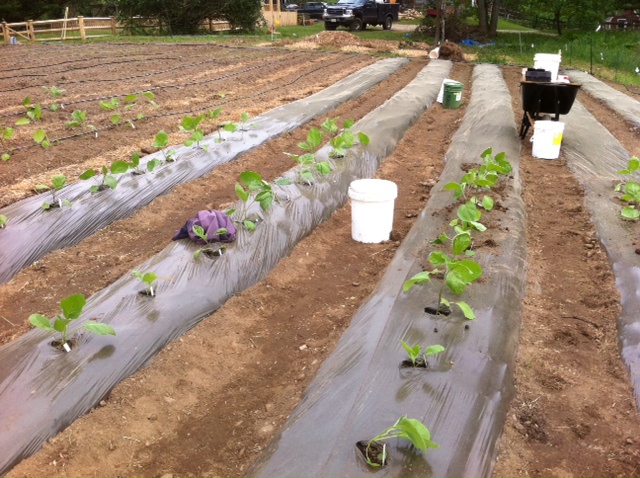
    At the same time, I’m real­iz­ing that I should have worked a lit­tle hard­er to get myself in shape this win­ter.    We laid down black plas­tic mulch the oth­er day over the bot­tom 6 rows in the gar­den. That’s where we’re plan­ning on plant­i­ng the toma­toes, pep­per and egg­plants, and the black plas­tic warms up the soil and sup­press­es weeds. After a full day of bend­ing, stand­ing and squat­ting my legs were screaming.

    The black lines along the rows are drip tape, part of the irri­ga­tion sys­tem we bought at Brook­dale Farm in New Hamp­shire. Each row has a line of tape that will slow­ly drip water through­out the day. They all con­nect at the end of the rows to a main line that we’ll run down the side of the field and will hook up to a gar­den hose. This sys­tem uses much less water than hand water­ing would and will save us a lot of time  and effort.

    Rolling out the plas­tic mulch
    We dug a trench and buried it on either side of the row
    Notice the drip tape lines going under the plastic
    Fin­ished!
    Mean­while, our toma­to, pep­per and egg­plants are hard­en­ing off out­side, get­ting ready to be plant­ed tomor­row. We’ll just cut a hole through the plas­tic and put them in the ground. It’s good they’re going in the ground, they’ve got­ten real­ly big.
  • Hooray, we have a field!

    It took two days but the fields are all laid out and we’re going to start plant­i­ng tomorrow!

    We made 30 inch rows  (so we can work in them and step over them eas­i­ly) and 16 inch walk­ways (16″ because that was the size of our biggest rake). The rows curve with the topog­ra­phy of the land because there’s a pret­ty sig­nif­i­cant slope and we want to catch as much water as pos­si­ble as it flows down­hill. If the rows were straight, a lot of water would just col­lect in the paths and flow down into the wet area in the mid­dle of the field, but this way the water will col­lect against the beds and fil­ter slow­ly through.
    We used a cou­ple dif­fer­ent meth­ods for rak­ing the dirt, every­one had their favorite ways to do it, but basi­cal­ly we laid out the 30 inch beds using a home­made “scrib­ing tool” (basi­cal­ly a cou­ple of stakes drilled onto a piece of wood 30″ apart)
    and then we pro­ceed­ed to alter­nate between rak­ing up the dirt on either side and rak­ing it down the mid­dle to cre­ate path­ways. It was pret­ty exhaust­ing dirty work, but also very sat­is­fy­ing, the gar­den is final­ly com­ing togeth­er and it’s so nice to be out­side in the sun! We all got sunburnt.
    In a cou­ple of the walk­ways we put down card­board and straw to keep down the weeds and cre­ate a path. The card­board we’ve been get­ting from super­mar­ket pro­duce box­es and from a bike shop in Con­cord (bikes come in big card­board box­es). It’s going to be pret­ty hard to col­lect enough card­board to put down on these rows, how­ev­er, so we’re going to plant some in clover instead.
    Our Aer­i­al Shot: from on top of the lum­ber racks on the back of Dav­e’s pickup
    The bot­tom cor­ner is going to become one big tri­an­gu­lar bed, prob­a­bly for cucumbers.
    It’s been a long cou­ple of days but we can final­ly start planting!
  • New House for the Pigs

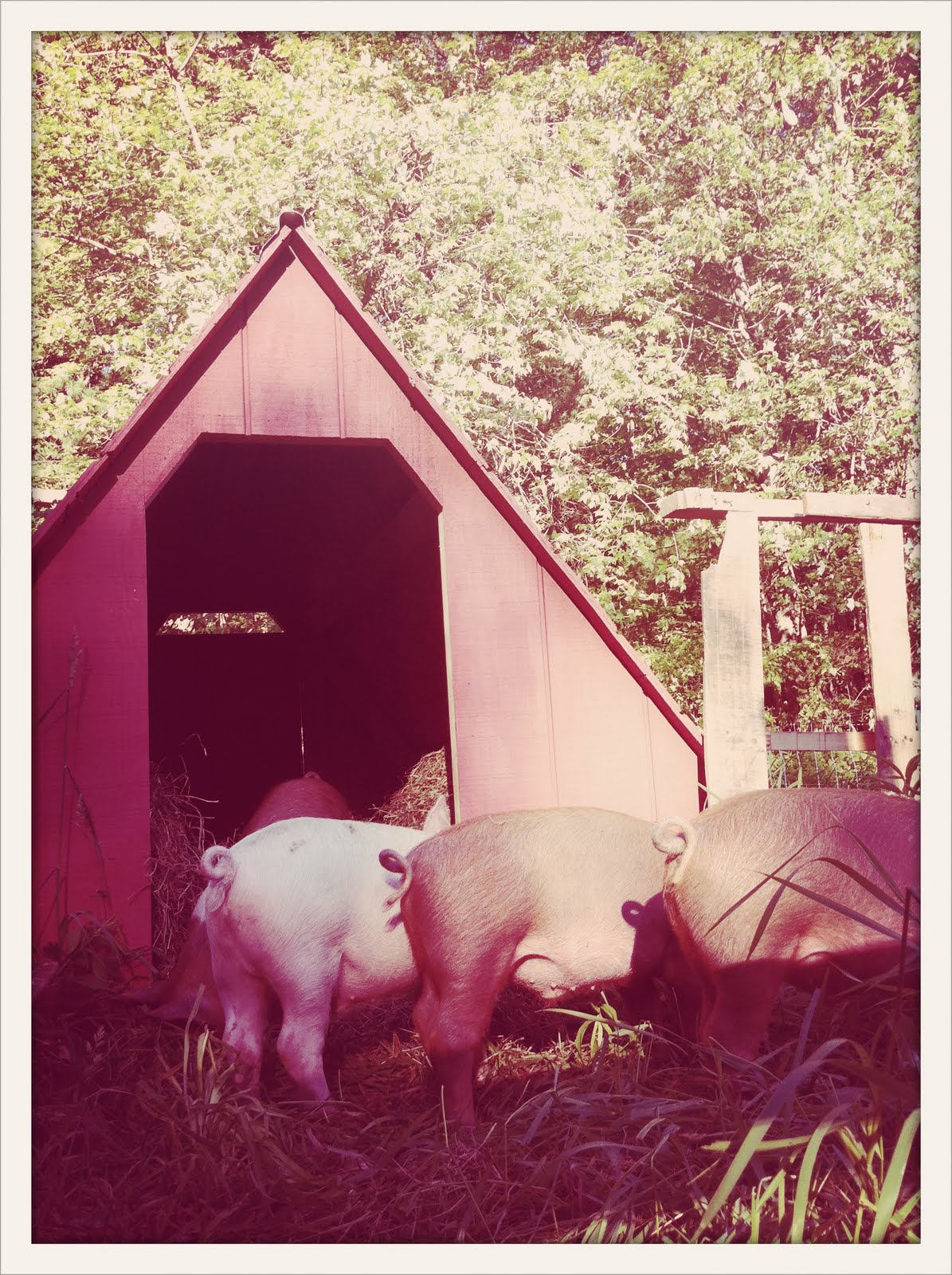
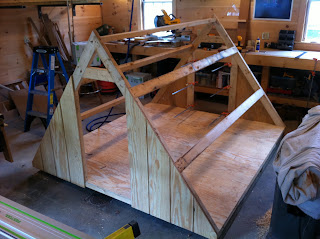
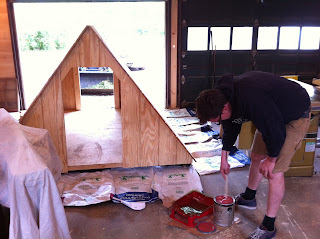
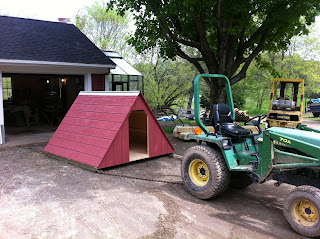
    I recent­ly com­plet­ed the pig’s new shel­ter for when they are relo­cat­ed onto pas­ture. I knew that I want­ed to build a sim­ple A‑frame for them, so I looked around online and found some plans from an exten­sion ser­vice from the 60s. This is a very clas­sic design. The only dif­fer­ence is that the plans called for doors, but I decid­ed not to add them because it just does­n’t seem nec­es­sary. My pigs won’t be around in the win­ter and if at some point I do keep pigs over win­ter, they prob­a­bly wont be out on pas­ture any­way. This is sim­ply the pig’s sum­mer home.

    My goal was to build the house as inex­pen­sive­ly as pos­si­ble and to use as many free/recycled mate­ri­als as I could find. At first I thought it was going to be dif­fi­cult to get what I need­ed for free since its all dimen­sion­al lum­ber and sheet goods, but it worked out pret­ty well. After a some­what awk­ward con­ver­sa­tion with the lum­ber­yard man­ag­er at Lit­tle­ton Lum­ber, they took me around back and fork­lift­ed down a huge stack of 2x4s and 2x6s for me. They were all recy­cled and had lots of nail holes and some sta­ples in them. And they were pret­ty twist­ed and checked, but there were a lot of long lengths, a bunch of 16′ and 12’ers. So I said thank you very much and took the whole stack.
    I had 5 sheets of Tex­ture 1–11 ply­wood which were left over from some project. I found them in the garage and I have no idea how they got there. Tex­ture 1–11 is ply­wood that some­what resem­bles barn boards. Its kind of hokey stuff, but it was free and for this pur­pose it actu­al­ly was per­fect. It looks nicer than nor­mal exte­ri­or ply­wood at least.
    I was real­ly hap­py with how effi­cient­ly I was able to use my mate­ri­als. I used all 5 sheets of the tex­ture 1–11, with very lit­tle scrap left over. The tri­an­gu­lar­ly shaped sec­tions in the pic above were all cut out from one 8′ long strip. The only mate­ri­als that I end­ed up buy­ing were:
    (2) pres­sure treat­ed 4x4s (for skids)
    (2) 4x8 sheets 3/4″ exte­ri­or grade ply­wood (for the floor)
    (1) gal­va­nized steel ridge roll
    screws, glue, and paint
    All togeth­er, I don’t think I spent more than $150.
    All the fram­ing I did with dry­wall screws and then I attached the ply­wood to the frame with glue and nails (using my new fin­ish nail­er). I found this glue that Tite­bond makes called Interior/Exterior Wood Con­struc­tion Adhe­sive which I real­ly liked. You apply it with a caulk gun so its great for these projects when you need to get a lot of glue on quickly.
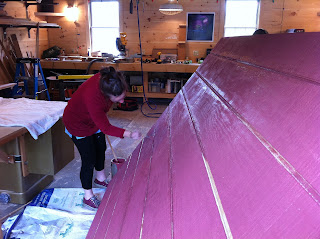
    I took an old can of paint from when the barn was re-paint­ed and got it cloned so the pig house match­es all the outbuildings.
    I drilled through the skids and installed a loop of chain with 1/2″ hex bolts so that the house can quick­ly be hooked up to the trac­tor. The house will be mov­ing every month or so with the pigs as they are rotat­ed through the pasture.
    And here it is, all the way out at the end of the field! I can’t wait to get the pigs out there. I will be set­ting up the fenc­ing tomor­row, so hope­ful­ly I’ll be mov­ing the pigs in a few days.
  • Wendell Berry Passage

    “Eric Gill sees in this indus­tri­al dis­mem­ber­ment of labor a cru­cial dis­tinc­tion between mak­ing and doing, and he describes ‘the degra­da­tion of the mind’ that is the result of the shift from mak­ing to doing. This degra­da­tion of the mind can­not, of course, be with­out con­se­quences. One obvi­ous con­se­quence is the degra­da­tion of prod­ucts. When work­ers’ minds are degrad­ed by loss of respon­si­bil­i­ty for what is being made, they can­not use judg­ment; they have no use for their crit­i­cal fac­ul­ties; they have no occa­sions for the exer­cise of work­man­ship, of work­man­ly pride. And the con­sumer is degrad­ed by loss of oppor­tu­ni­ty for qual­i­ta­tive choice. This is why we must now buy our clothes and imme­di­ate­ly re-sew the but­tons; it is why our expen­sive pur­chas­es quick­ly become junk.

    With indus­tri­al­iza­tion has come a gen­er­al depre­ci­a­tion of work. As the pice of work has gone up, the val­ue of it has gone down, until it is now so depressed that peo­ple sim­ply do not want to do it any­more. We can say with­out exag­ger­a­tion that the present nation­al ambi­tion of the Unit­ed States is unem­ploy­ment. Peo­ple live for quit­ting time, for week­ends, for vaca­tions and for retire­ment; more­over, this ambi­tion seems to be class­less, as true in the exec­u­tive suites as on the assem­bly lines. One works not because the work is nec­es­sary, valu­able, use­ful to a desir­able end, or because one loves to do it, but only to be able to quit — a con­di­tion that a san­er time would regard as infer­nal, a con­dem­na­tion. This is explained, of course, by the dull­ness of the work, by the loss of respon­si­bil­i­ty for, or cred­it for, or knowl­edge of the thing made. What can be the sta­tus of the work­ing small farmer in a nation whose mot­to is a sigh of relief: “Thank God it’s Friday”?

    But there is an even more impor­tant con­se­quence: By the dis­mem­ber­ment of work, by the degra­da­tion of our minds as work­ers, we are denied our high­est call­ing, for, as Gill says, ‘every man is called to give love to the work of his hands. Every man is called to be an artist’ (Gill, A Holy Con­di­tion of Work­ing). The small fam­i­ly farm is one of the last places — they are get­ting rar­er every day — where men and women (and girls and boys, too) can answer that call to be an artist, to learn to give love to the work of their hands. It is one of the last places where the mak­er — and some farm­ers sill do talk about ‘mak­ing the crops’ — is respon­si­ble, from start to fin­ish, for the thing made. This cer­tain­ly has a spir­i­tu­al val­ue, but it is not for that rea­son an imprac­ti­cal or uneco­nom­ic one. In fact, from the exer­cise of this respon­si­bil­i­ty, this giv­ing of love to the work of the hands, the farmer, the farm, the con­sumer, and the nation all stand to gain in the most prac­ti­cal was: They gain the means of life, the good­ness of food, and the longevi­ty and depend­abil­i­ty of the sources of food, both nat­ur­al and cul­tur­al. The prop­er answer to the spir­i­tu­al call­ing becomes, in turn, the prop­er ful­fill­ment of phys­i­cal need.”

    – Wen­dell Berry, A Defense of the Fam­i­ly Farm


  • Rainy Week

    Those of you who live in the Mass­a­chu­setts area can prob­a­bly empathize with me when I say that this past week has been the absolute worst.

    We woke up on Mon­day morn­ing and real­ized almost imme­di­ate­ly that there was no way we were going to be able to per­form the final till on Wednes­day, it was cold, rainy and drea­ry and — accord­ing to the weath­er report — there was no end in sight. Nat­u­ral­ly, this real­iza­tion was fol­lowed by a cou­ple hours of mop­ing, fin­ger-point­ing and rock-kick­ing. Why had­n’t we paid atten­tion to the weath­er report and tilled on Fri­day when it was still sun­ny and dry? What were we going to do all week in the mud and the rain? Was our sum­mer har­vest ruined by one poor deci­sion? Was it a poor deci­sion? What was worse, to till too soon and face the weeds or to be plant­i­ng our field at the very end of May? And what to do with all those crazy two month old toma­to plants over­run­ning the greenhouse????
    Well I’m writ­ing now to say, we did it! We slogged through the mud­dy, rainy week and now we’re pulling our­selves out the oth­er side alive and well (except for a cou­ple of chick­ens — but that’s a sto­ry for anoth­er post). We plant­ed some more in the kitchen gar­den, did some Spring clean­ing, built a shel­ter for the pigs and got the toma­to plants out­side where they’re hard­en­ing off. Now we’re glued to the weath­er report  hop­ing it’s going to dry out in the next cou­ple of days so we can get our fields up and run­ning and our trans­plants in the ground. Who knows if we made the “right” deci­sion, or if there even is a “right” deci­sion, but we’re forg­ing ahead.
    And as the weath­er improves, so do our moods. I see sun so I’ve got to get out­side, but here are some pictures.
    We’re using a cou­ple emp­ty raised beds to keep toma­to plants out­side. We have wire hoops ready if we need to tarp them against the cold at night.
    Flower trans­plants
    Build­ing the pig shelter